






















Walk through any grocery store deli counter and you'll find stacks of thinly sliced deli ham, pink, uniform, and priced by the pound. It looks like ham. It's labeled ham. But if you've ever tasted a real slice of authentic Virginia country ham, you already know something is different. The question is: what, exactly?
This guide breaks down the actual differences between processed deli ham and authentic Virginia ham , from how each is made to what ends up in your body, so you can make an informed decision the next time you're buying ham online or at the counter.
What Is Processed Deli Ham, and What's Actually in It?
Is deli ham processed? Yes, and significantly so. Most deli ham sold in American grocery stores is what the industry calls a reformed product. That means it's not a single whole cut of pork. Instead, it's made from multiple pieces of pork , often scraps and off-cuts , that are mechanically separated, chopped, or ground, then mixed with binders and pressed back together into a uniform loaf shape.
When you ask how deli ham is made, the process typically goes like this:
- Pork pieces are trimmed, sorted, and sometimes tumbled to break down muscle fibers.
- The meat is mixed with a curing solution containing water, salt, sodium nitrite, phosphates, and often sugar or dextrose.
- It's packed into molds and cooked under pressure, forming a consistent block.
- Some products are smoked or have "smoke flavor" added afterward.
Deli ham nutrition facts vary by brand, but a standard 2-oz serving typically contains 500–900mg of sodium, 60–90 calories, and anywhere from 7–12 grams of protein. The elevated sodium is largely a result of the brine injection process , where water and salt are pumped directly into the meat to increase yield and weight.
On the label, processed ham often appears as "ham and water product" or "ham with natural juices" , USDA classifications that indicate the amount of added water. The more water added, the lower the classification and, generally, the lower the quality. Common additives you'll find include:
- Sodium nitrite (preservative and color fixative)
- Sodium phosphate (moisture retention)
- Dextrose or corn syrup (flavor balance)
- Carrageenan (binder/thickener)
- "Natural smoke flavor" (artificial smoke substitute)
Is deli ham healthy? That's a reasonable question. In moderation, deli ham can be part of a balanced diet; it's a lean protein source. But the high sodium content, preservatives, and additives are worth factoring in, especially for anyone monitoring sodium intake or trying to avoid ultra-processed foods.
What Makes Virginia Country Ham Different? (Whole Muscle, Minimal Ingredients)
Country ham, and specifically Virginia ham, is a fundamentally different product, made in a fundamentally different way.
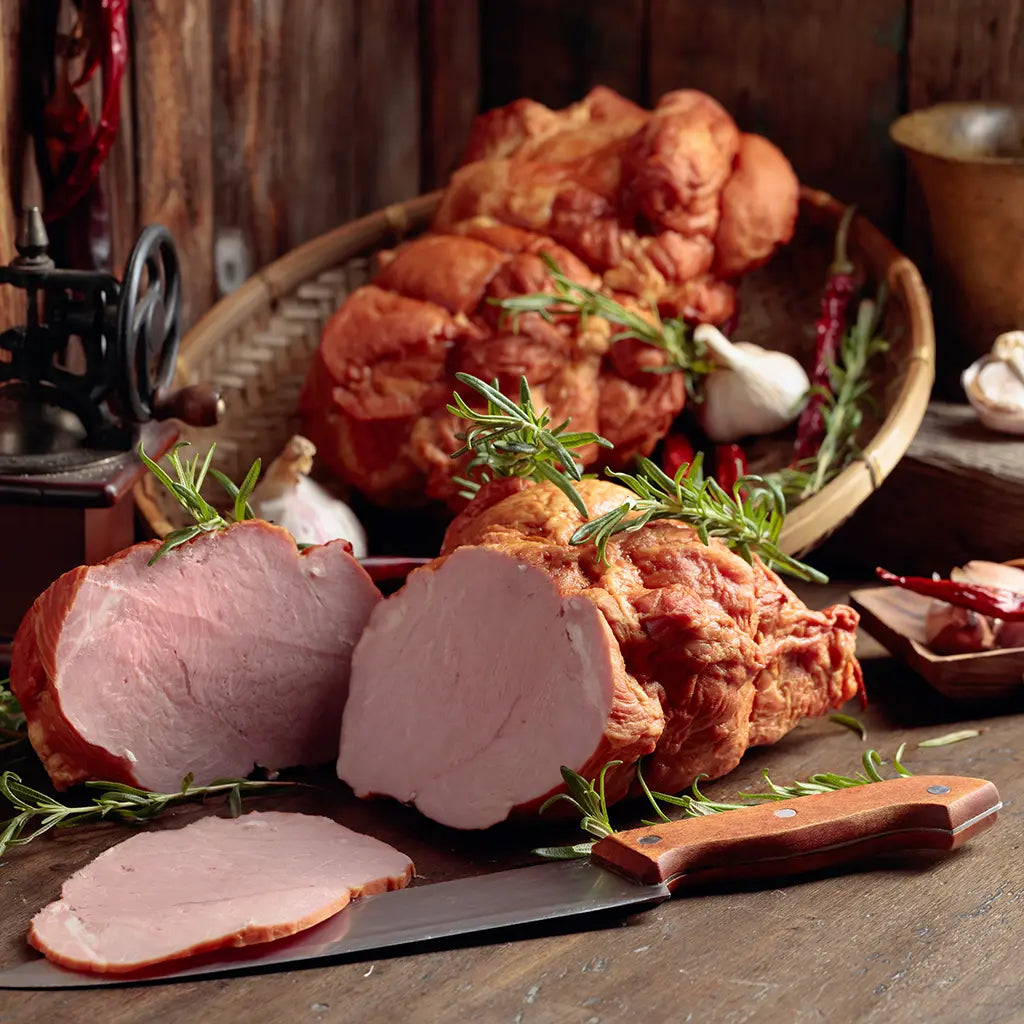
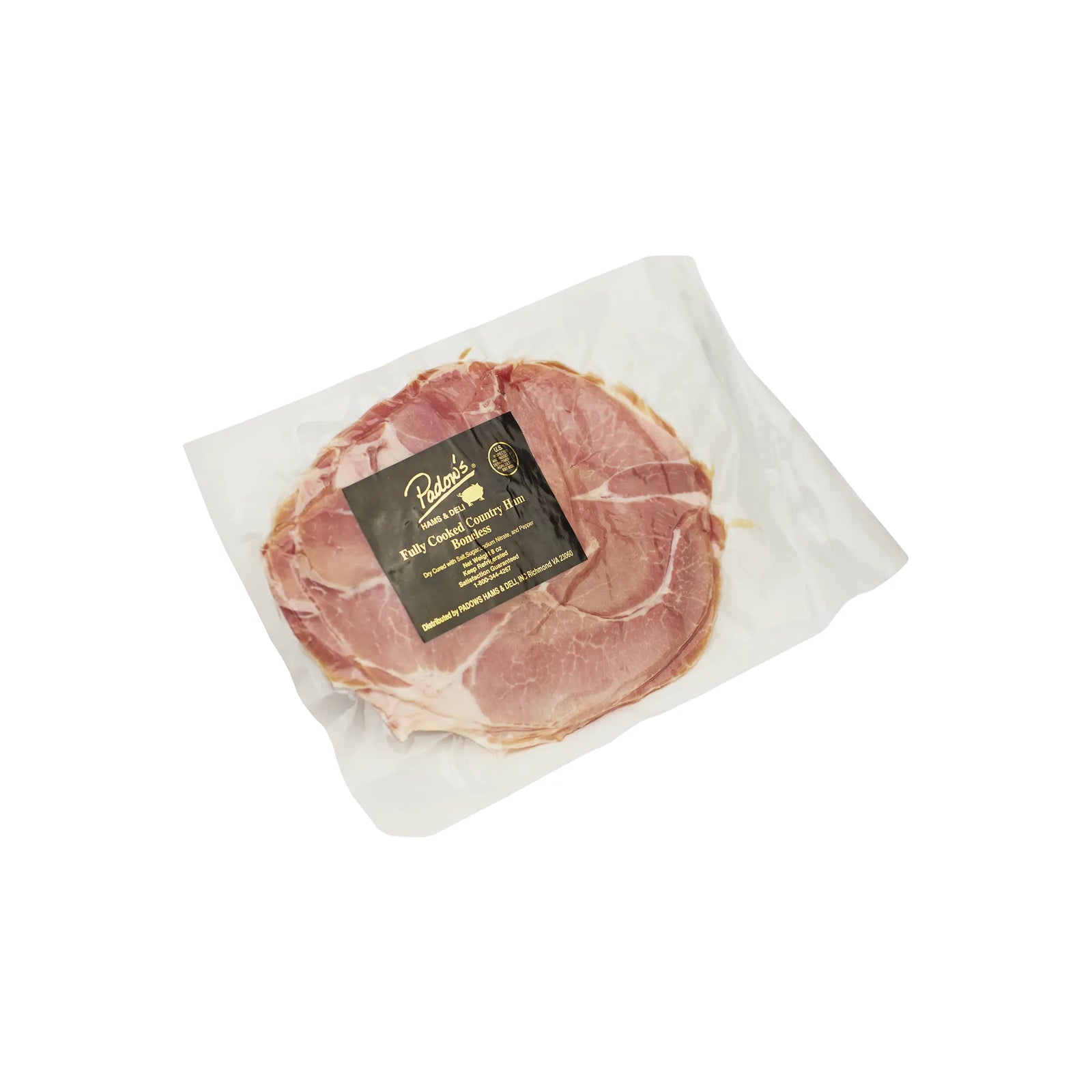
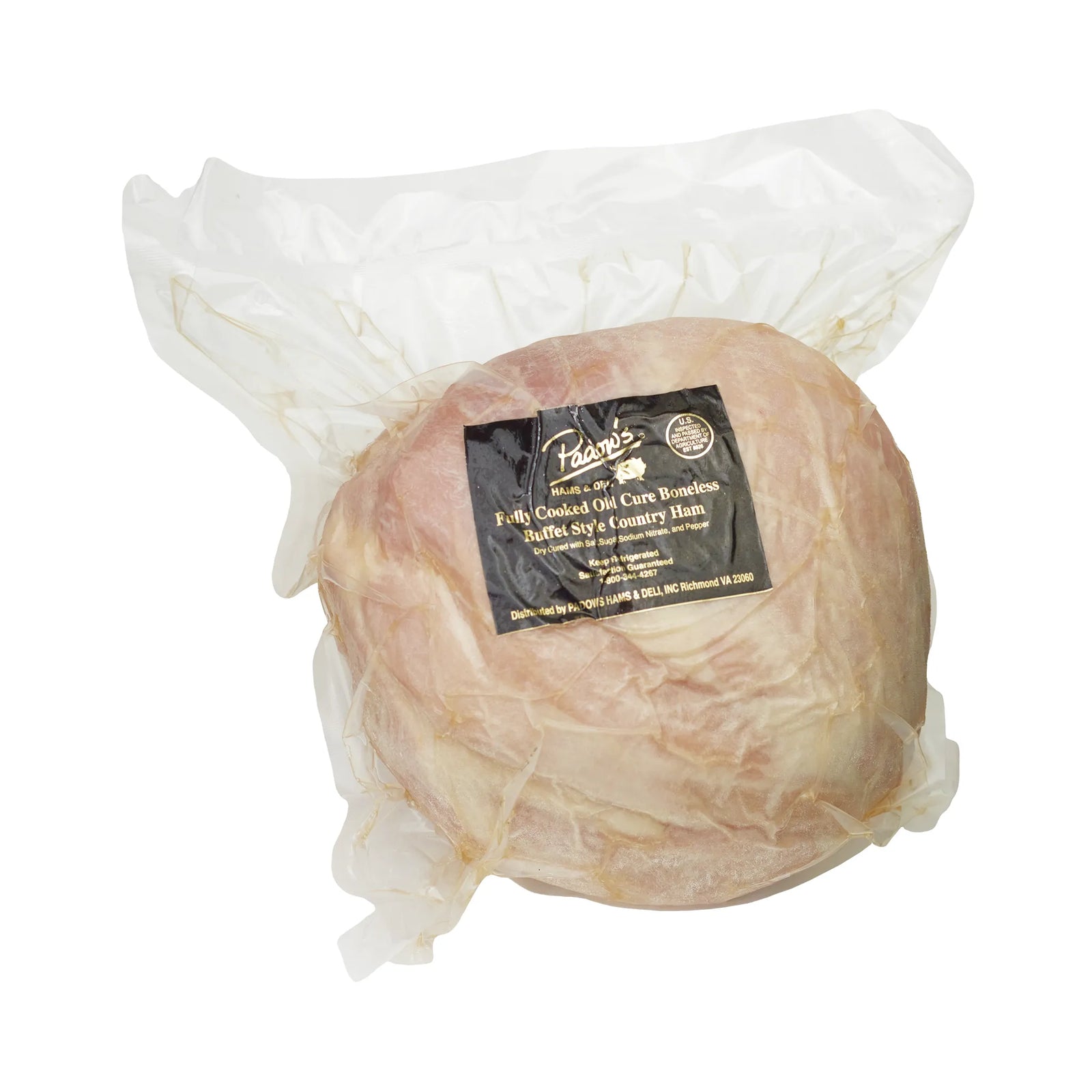
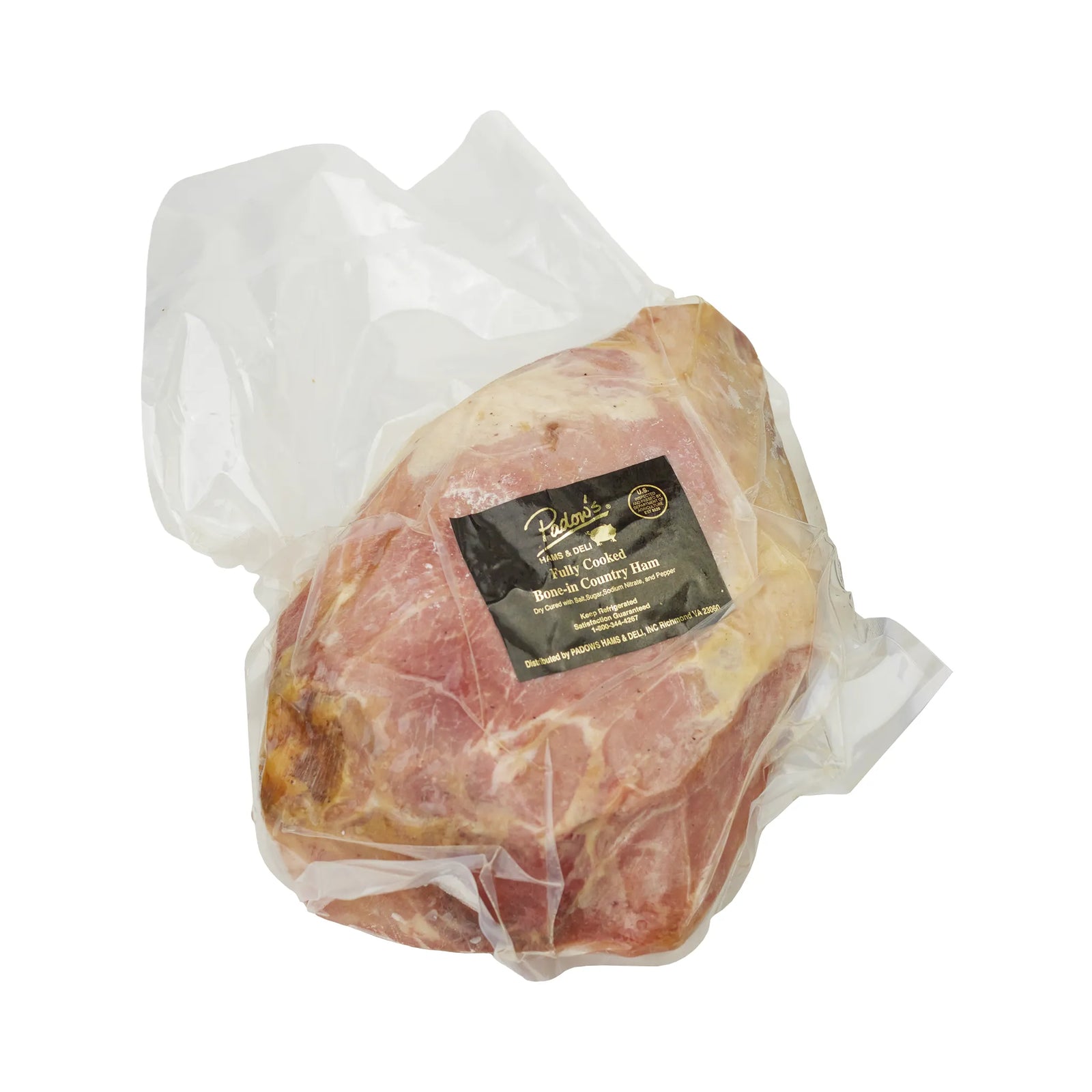
Authentic Virginia country ham starts with a single, intact cut of pork, typically the hind leg. It is never reformed, reconstructed, or assembled from multiple pieces. What you're getting is one whole muscle, cured and aged the traditional way.
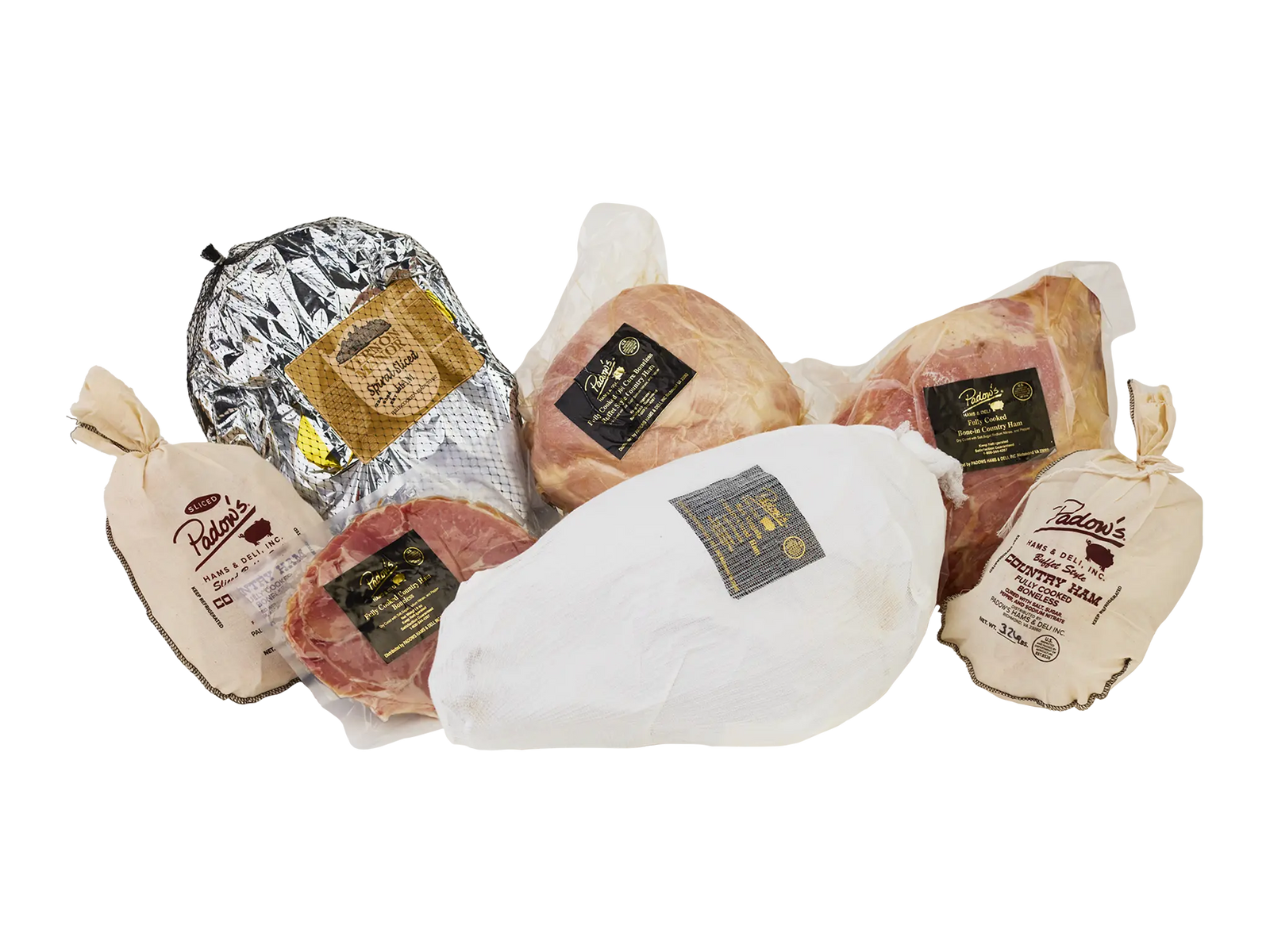
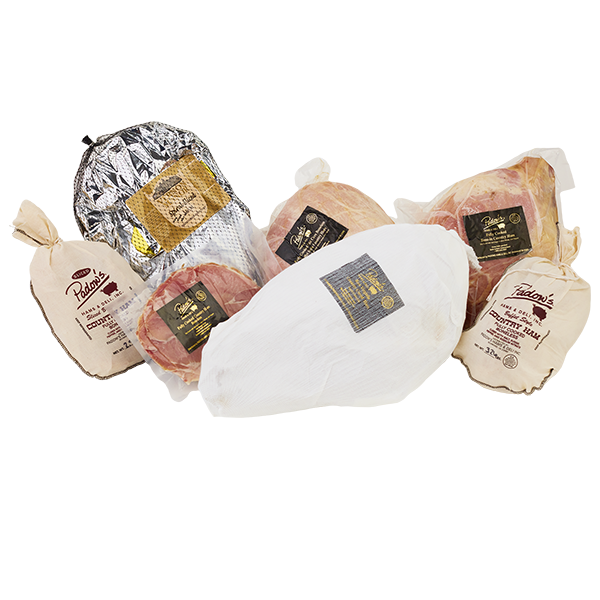
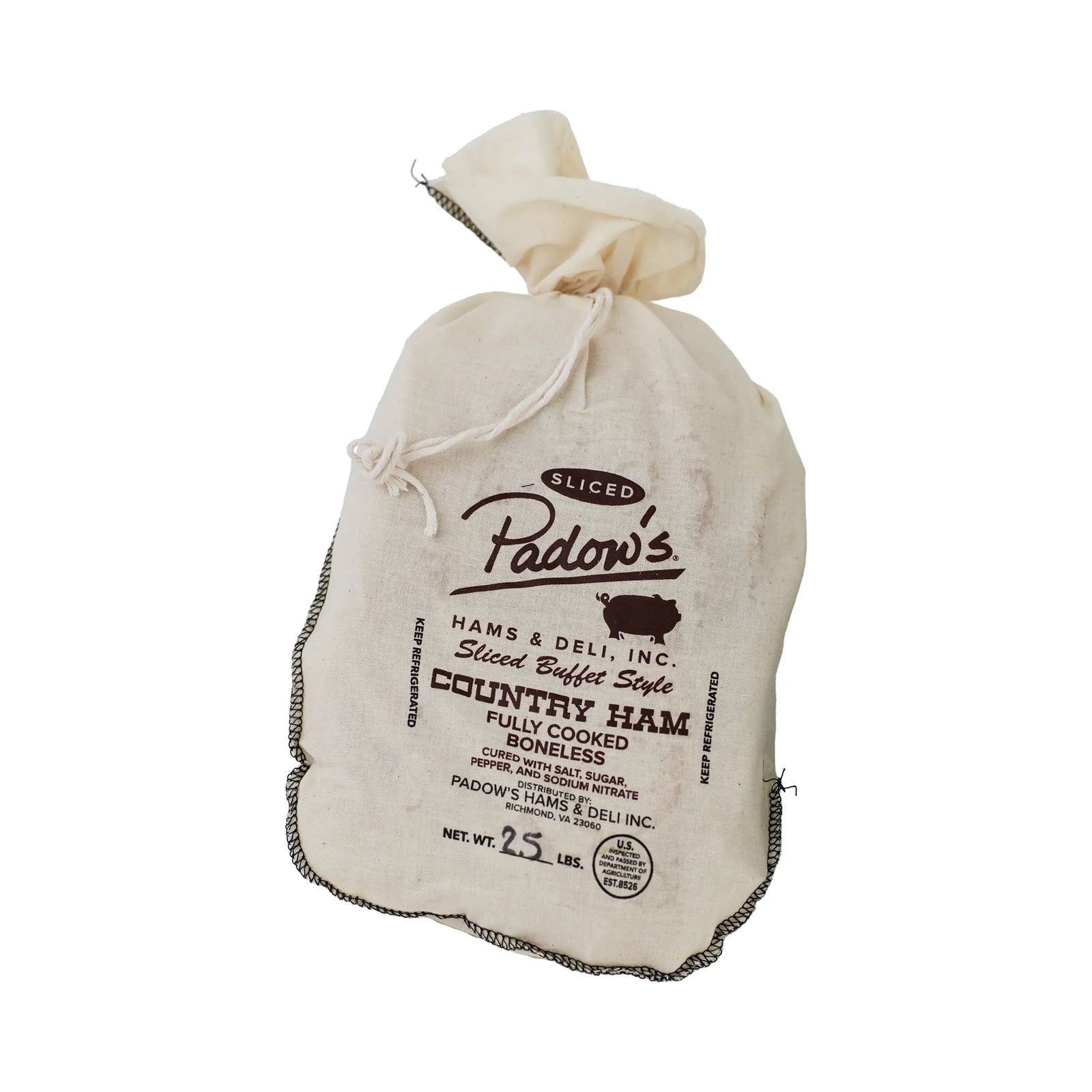
At Padow's Hams Co. in Richmond, Virginia, that process has looked the same since 1936: the ham is dry-rubbed with salt and aged naturally. No liquid brine injection. No smoke. No artificial flavors. The ingredient list for a Padow's country ham is exactly what you'd expect from something real: pork and salt. That's it.
This salt-only curing method, with no smoking involved, draws out moisture, concentrates flavor, and creates a product that develops genuine complexity over time. It's not a shortcut. It's the original method, practiced in Virginia for generations.
The result is a ham that doesn't need a long list of additives to taste like something. It already does.
Texture and Flavor: Side-by-Side Comparison
| Processed Deli Ham | Authentic Virginia Country Ham |
|---|---|
| Reformed from multiple muscle pieces | Single whole muscle cut |
| Contains water, phosphates, sodium nitrite | Pork and salt only |
| Soft, uniform, slightly rubbery texture | Firm, dense, and satisfyingly chewy |
| Mild, one-dimensional flavor | Complex, savory depth |
| Long ingredient list | Two ingredients. That's it. |
| Mass-produced | Handcrafted since 1936 |
Processed deli ham has a soft, springy texture, the kind that comes from water content and binders holding things together. Slice it thin and it folds uniformly. The flavor is mild and one-note: salty with a faint sweetness, and in many cases a hint of artificial smokiness from added flavoring. It's inoffensive by design; it was made to appeal to the broadest possible audience.
Authentic country ham is a different experience entirely. The texture is firm and dense; you can feel that it's a real cut of meat. Salt-curing removes moisture naturally, which concentrates the flavor and gives the meat a satisfying chew. The taste is savory and complex, with depth that builds as you eat it. There's nothing artificial propping it up. What you taste is simply well-raised pork, properly cured.
How to Read a Ham Label (and Spot the Difference at a Glance)
You don't need to be a food scientist to tell processed ham from the real thing. The label will tell you everything if you know what to look for.
Look at the USDA classification: Ham sold in the US falls into categories based on added water content. "Ham" (no qualifier) is the highest grade; it must be at least 20.5% protein with no added water. "Ham with natural juices" has a little added water. "Ham and water product" has the most, sometimes up to 35% added water by weight. The further down that list, the more processed the product.
Count the ingredients: A real country ham label will show two or three ingredients at most. A processed deli ham label might show ten or more. If you see phosphates, carrageenan, dextrose, or "natural smoke flavor", you're looking at a processed product.
Check the sodium per serving: High sodium (700mg+ per serving) often indicates water and brine injection. Authentic dry-cured country hams are naturally high in sodium from the curing salt, but they're not pumped with brine to increase volume.
Look for the whole muscle indicator: Some labels will say "whole muscle" explicitly. If the product is a loaf, perfectly uniform in shape, or described as "formed" or "shaped", it's reformed.
Check for smoke: Virginia country ham in the Padow's tradition is not smoked. If a label says "hickory smoked" or lists "smoke flavor", it's not the same product, and in the case of Padow's, it wouldn't be their ham at all.
Why It Matters: The Case for Buying Authentic
Processed deli ham isn't a modern innovation; it's a cost-reduction strategy. By using off-cuts, injecting water, and adding binders, manufacturers can produce large volumes of ham-adjacent product at a fraction of the cost of whole muscle curing. That's fine for what it is. But it's not the same thing as ham.
Authentic Virginia country ham is the original. It's what ham was before industrial food production changed the definition. Two ingredients. One whole muscle cut. Time and salt doing exactly what they've always done.
When you buy a Padow's country ham online and have it shipped to your door, you're getting something that has a real story behind it, a family business in Richmond, Virginia, doing things the same way since 1936. That's not marketing. That's the actual product.
Whether you're buying for yourself, stocking up for the holidays, or looking for a gift that stands apart from everything else, the choice between processed deli ham and authentic Virginia country ham comes down to one question: do you want the shortcut, or the real thing?
Explore Padow's Hams Co. and order authentic Virginia country ham online.
Shop Padow's