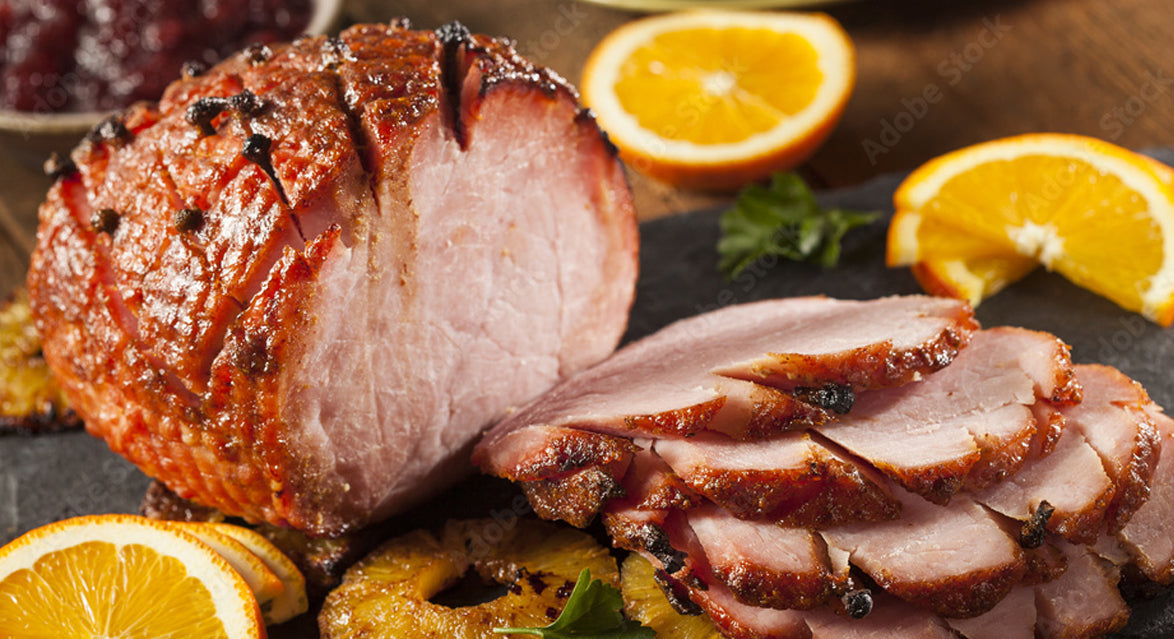

























Standing in front of the ham cooler trying to decide between bone-in and boneless can feel like more of a decision than it should be. Both will feed a table full of people. Both come from the same cut of pork. But the differences between them, flavor, texture, cooking time, and how much work you'll do at the carving board, are real, and worth knowing before you buy.
The Ham Debate: Bone-In or Boneless?
At its core, this comes down to a trade-off: bone-in ham generally delivers more flavor and a juicier bite, while boneless ham trades a bit of that richness for convenience. Neither is the "wrong" choice; it depends on what you're serving, who you're feeding, and how much time you want to spend at the cutting board.
The Different Kinds of Ham
Before getting into bone-in versus boneless specifically, it helps to know the broader landscape. Ham comes in several forms: fresh (uncured) ham, cured city-style ham, country ham (dry-cured and more intensely flavored), canned ham, and spiral-cut ham, which can be either bone-in or boneless. Bone-in and boneless aren't separate categories of ham so much as two different ways any of these styles can be prepared and sold. If you're curious how curing actually works and how it differs from "uncured" labeling, we break it down in Cured vs. Uncured Ham: What's the Difference?
What Makes a Bone-In Ham
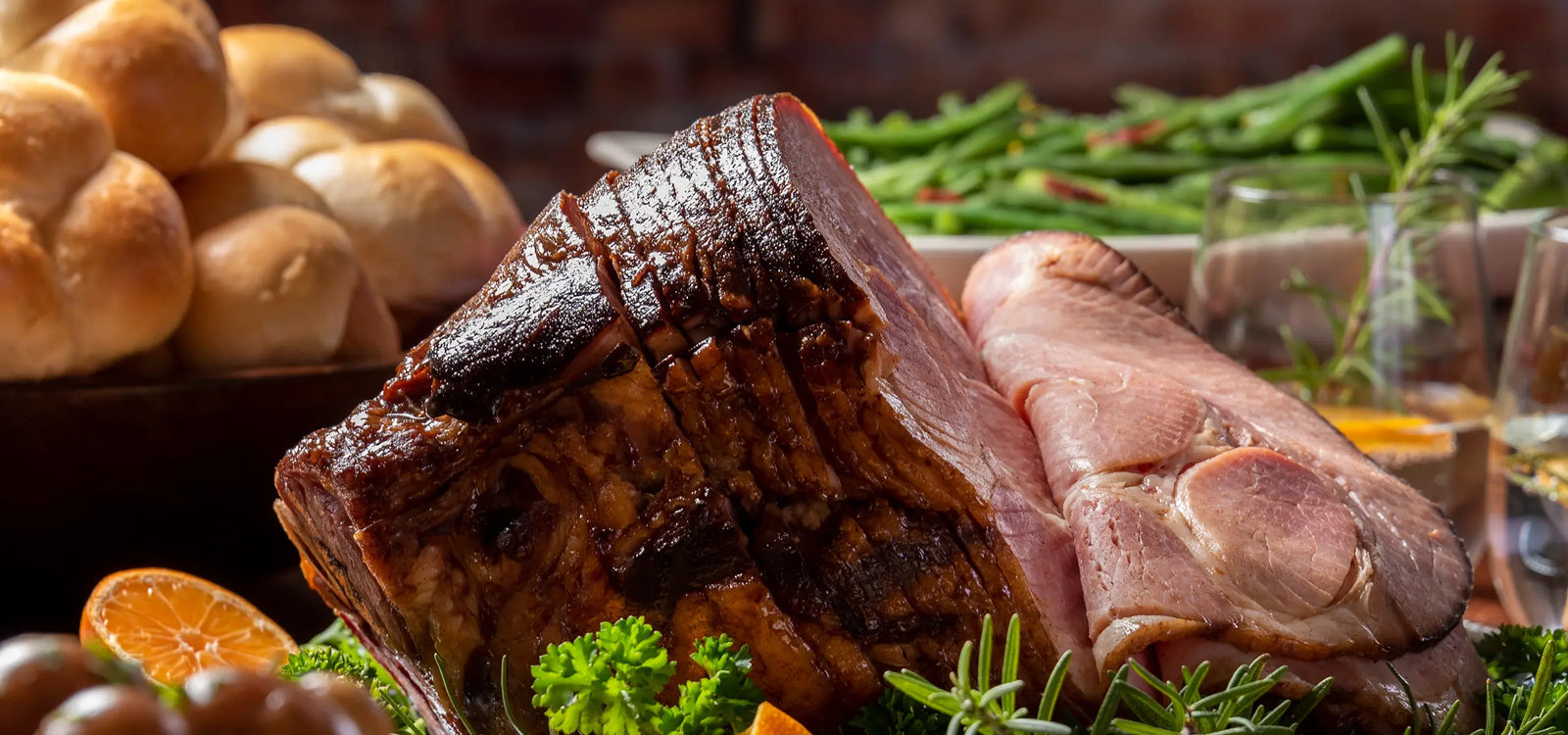
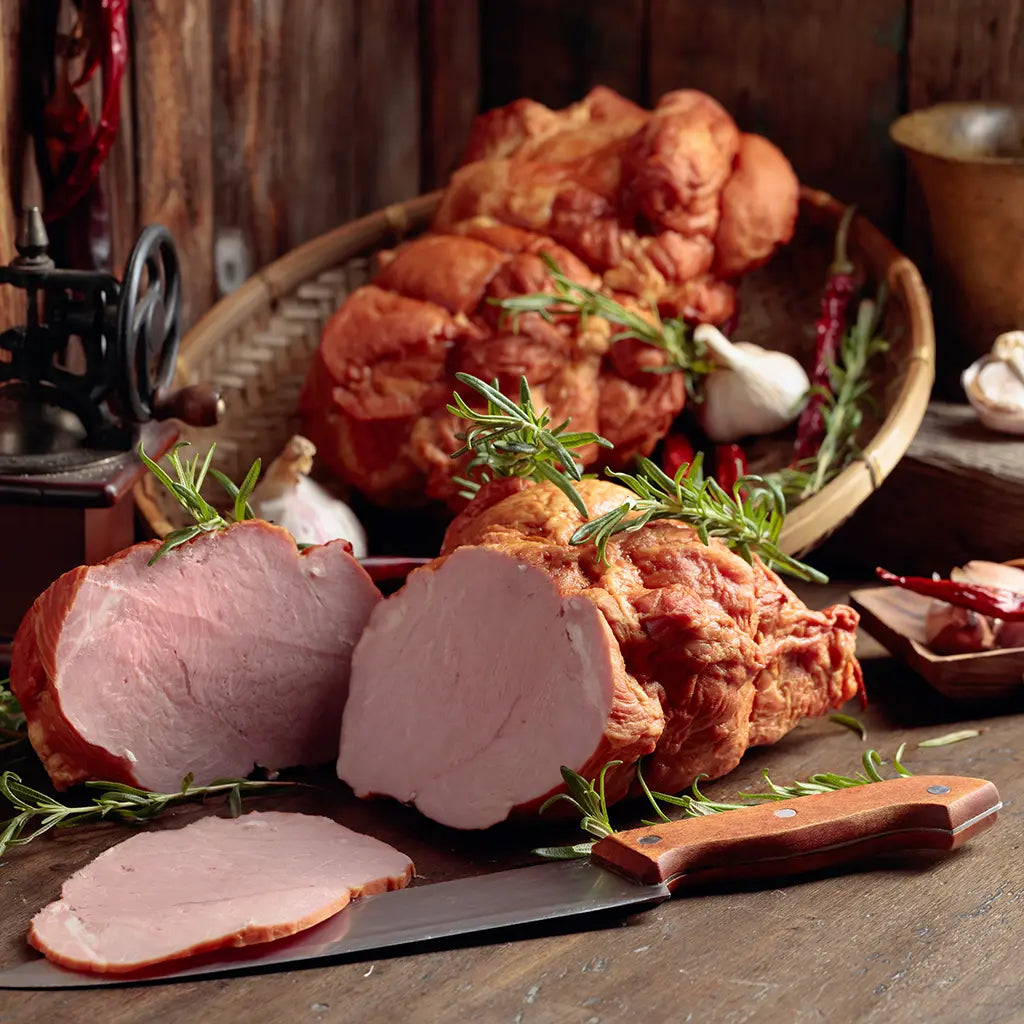
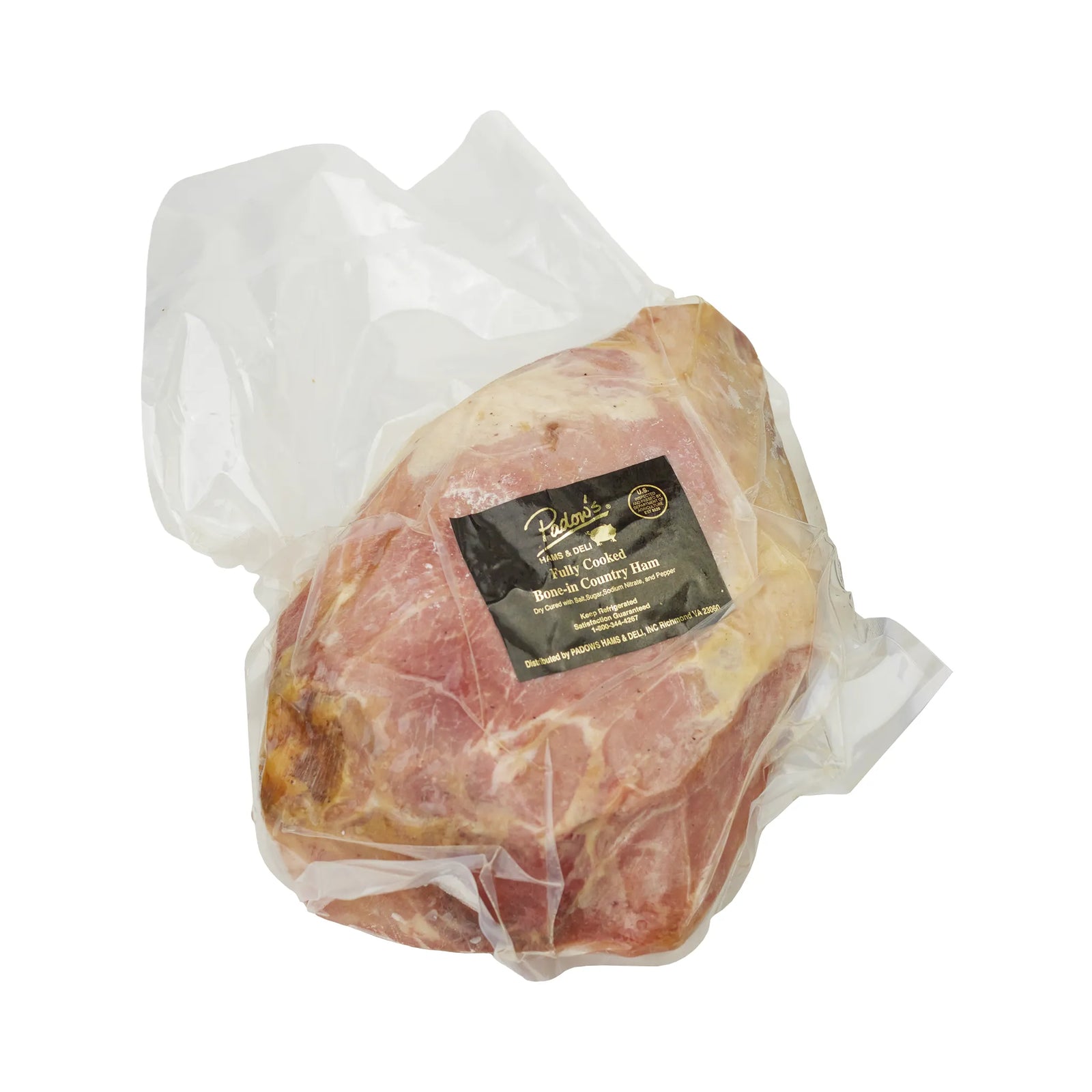
A bone-in ham keeps the leg bone intact through the curing, cooking, and slicing process. That bone acts as a natural insulator during cooking, which helps the meat around it stay moist, and it adds flavor as the ham cooks. It's the traditional way ham has been prepared for generations, and it's still the choice for anyone who wants maximum flavor and doesn't mind carving around a bone. Padow's bone-in ham collection includes both whole and half options for exactly this reason.
Bone-In Spiral Ham
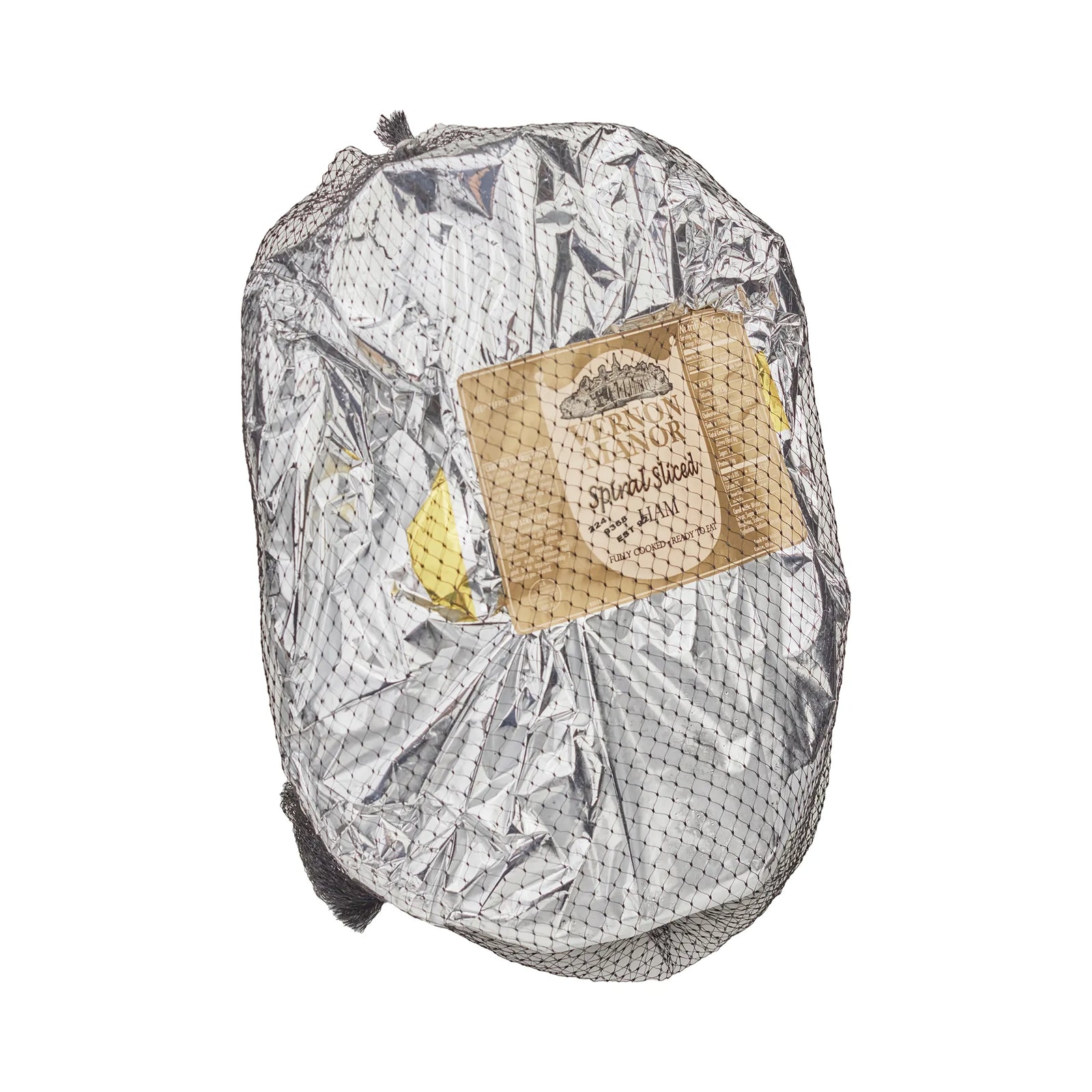
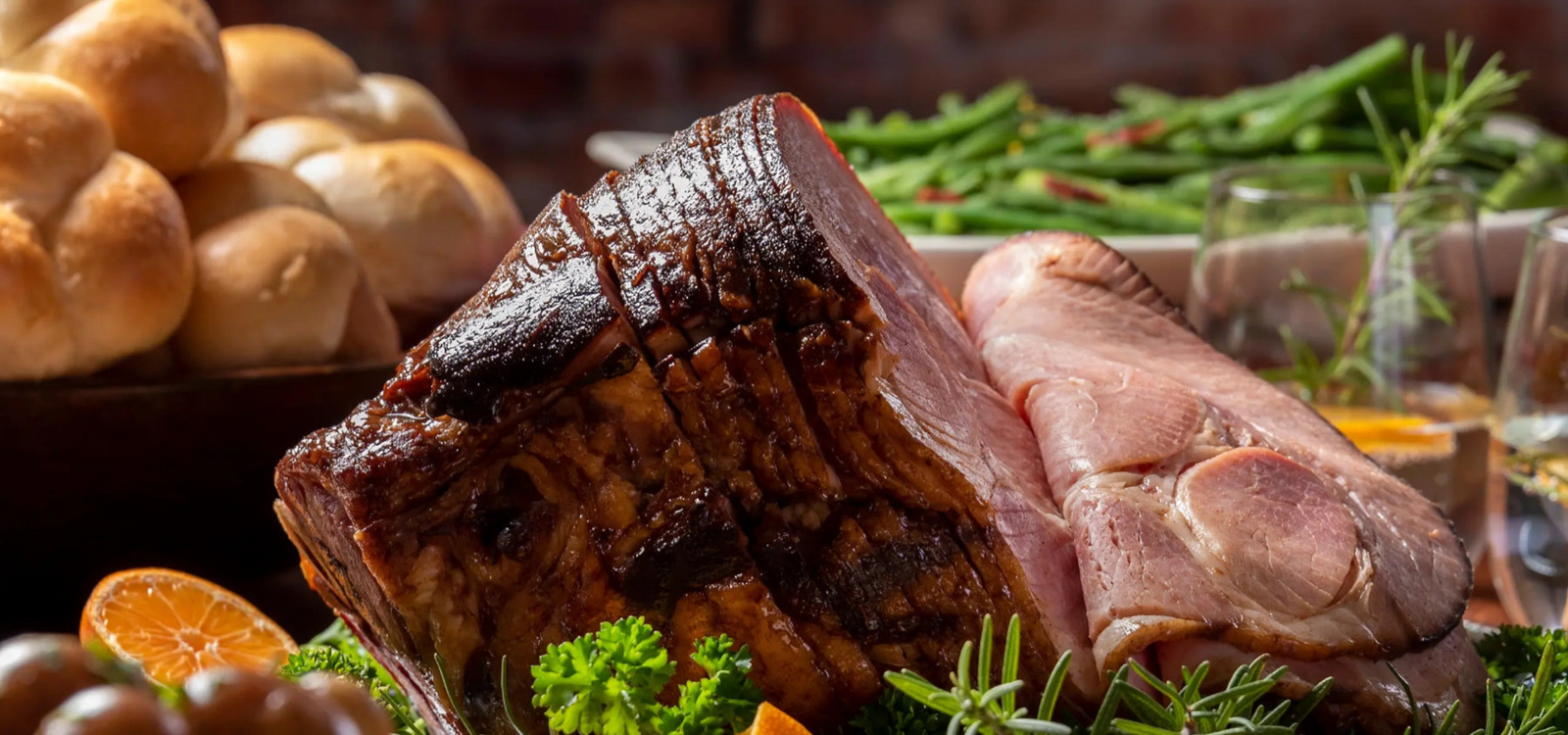
A bone-in spiral ham gets the best of both worlds: the flavor benefit of cooking on the bone, with pre-cut slices that fan out cleanly once warmed through. It's become the go-to option for holiday tables because it delivers that classic bone-in flavor without asking guests to carve their own plate. Padow's spiral ham collection is built around this exact format.
What Makes a Boneless Ham
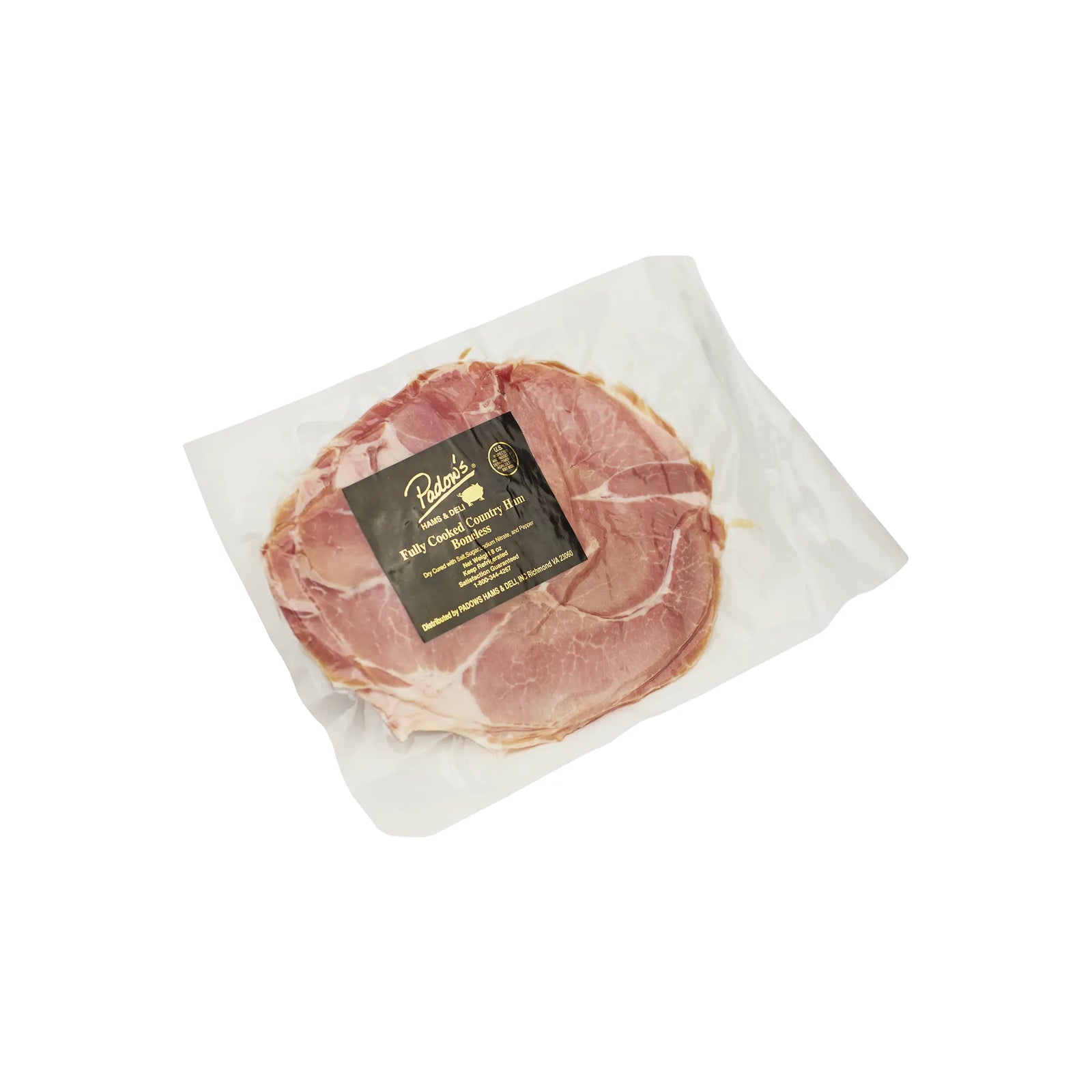
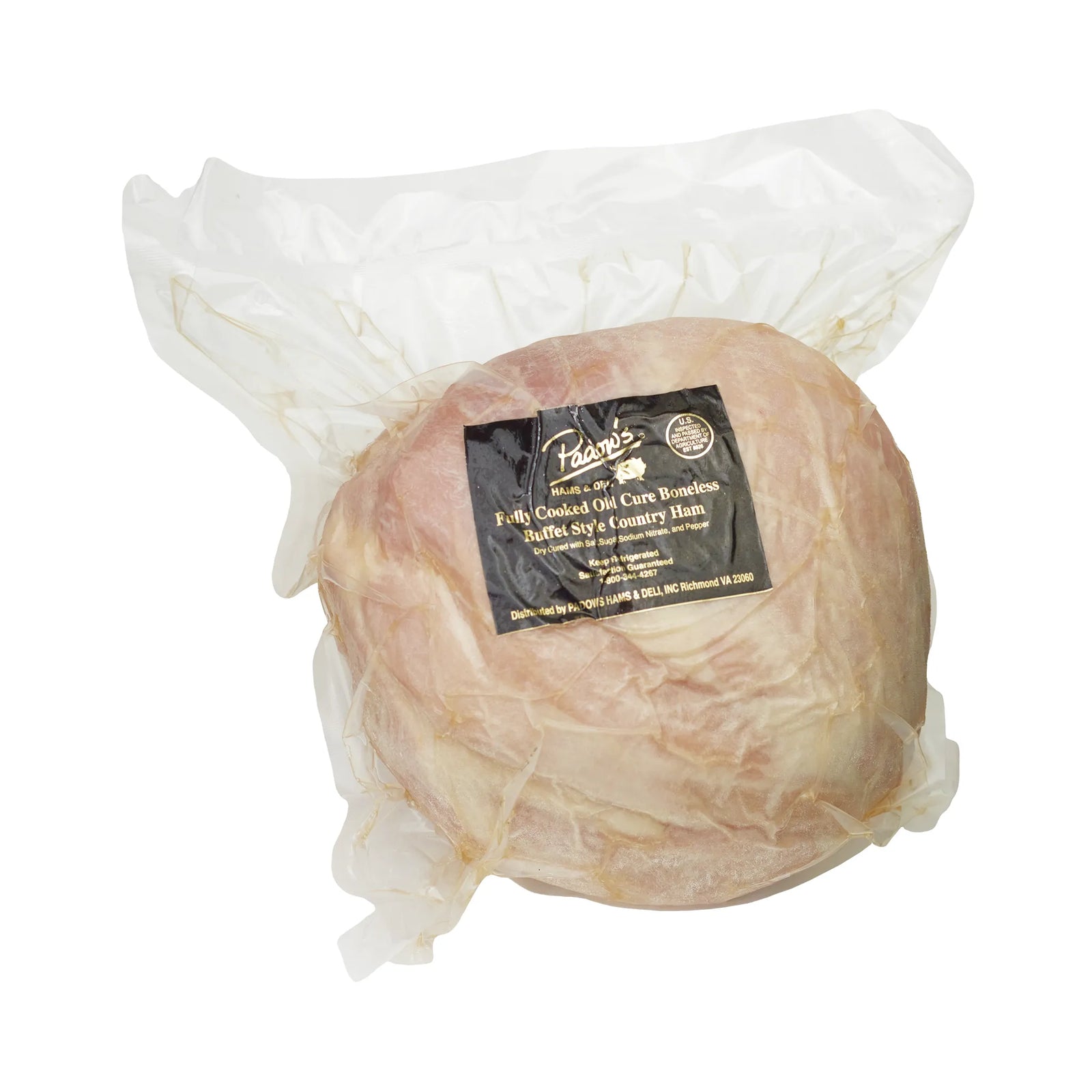
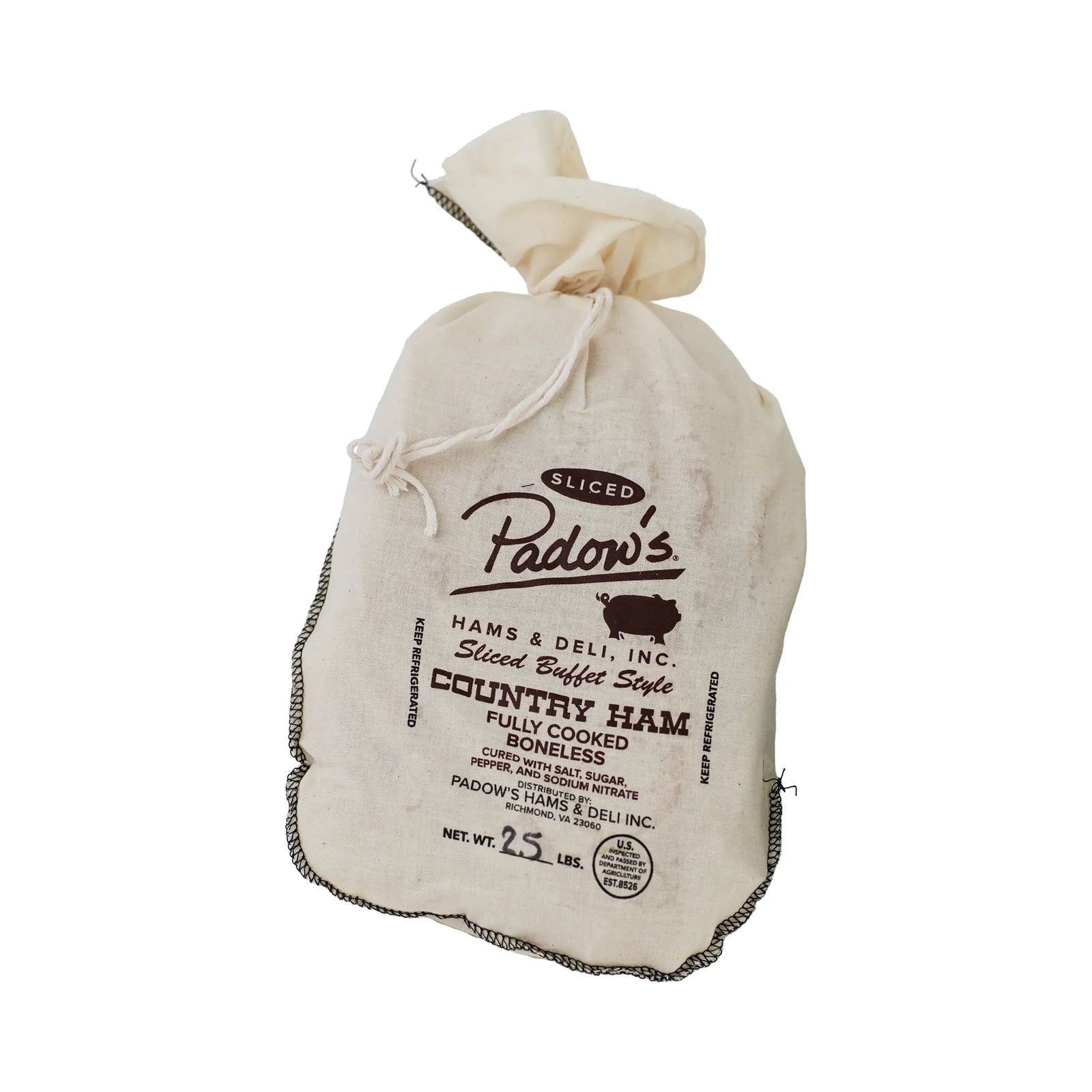
A boneless ham has had the leg bone removed before curing or cooking, leaving a solid, easy-to-slice piece of meat. Manufacturers often re-form or tie the meat into a uniform shape, which makes portioning simple and consistent from end to end. It's the more convenient option, especially for smaller gatherings or anyone who wants clean, even slices without any carving skill required. Padow's boneless ham collection is built for exactly that kind of ease.
Bone-In vs. Boneless Ham at a Glance
| Category | Bone-In Ham | Boneless Ham |
|---|---|---|
| Flavor | Deeper, richer flavor from cooking on the bone | Good flavor, but less depth than bone-in |
| Texture & juiciness | Juicier, bone helps regulate heat during cooking | Can dry out faster if overcooked; needs closer attention |
| Cooking time | ~18–20 min/lb (whole, smoked, cook-before-eating) | ~30–35 min/lb (boneless arm picnic shoulder) |
| Carving | Requires more skill and time | Fast, even slices with no carving skill needed |
| Price per pound | Usually lower | Usually higher |
| Actual usable meat | Less, some weight is bone | 100% usable meat |
| Best for | Holiday centerpieces, flavor-focused meals, larger groups | Buffets, smaller gatherings, time-strapped hosts |
| Common formats | Whole, half, bone-in spiral | Whole, half, pre-sliced |
Which Has More Flavor?
Bone-in ham generally wins here. The bone contributes flavor as the ham cooks, and the meat closest to it tends to be the most flavorful part of the whole ham. Boneless ham can still taste great, especially when it starts from a well-cured, quality cut, but it won't have quite the same depth you get from cooking a ham on the bone.
Texture and Juiciness
The bone does more than add flavor; it also helps regulate heat distribution, which keeps the surrounding meat from drying out as quickly. That means a bone-in ham often comes out juicier, especially in the thicker sections near the bone. Boneless ham can dry out a bit faster if it's overcooked, since there's no bone to buffer the heat, so it typically needs closer attention to cook time and temperature.
Cooking Time: What to Expect
Cooking times differ meaningfully between the two, and it's worth knowing before you plan your schedule. According to USDA guidance, a whole bone-in smoked ham (cook-before-eating) needs about 18 to 20 minutes per pound, while a boneless arm picnic shoulder needs closer to 30 to 35 minutes per pound (USDA FSIS). In both cases, the goal is a minimum internal temperature of 145°F, checked with a meat thermometer, with the meat rested for at least three minutes before carving.
Carving: Easy Slice or Full Production?
This is where boneless ham has a clear edge. Without a bone to work around, boneless ham slices quickly and evenly, which is why it's a popular choice for buffets or anyone short on time. Bone-in ham takes more care, and a bit of carving know-how, to get clean slices, though a bone-in spiral ham splits the difference by handling the hard part for you before it ever reaches your table.
Getting the Most for Your Money
Bone-in ham is usually less expensive per pound, but remember that some of that weight is bone, not meat you'll actually serve. Boneless ham costs more per pound but delivers 100% usable meat, so the value gap is often smaller than the sticker price suggests. If you're feeding a big group and don't mind carving, bone-in can stretch further for the price. If convenience and predictable portions matter more, boneless closes the gap.
Which One Belongs on Your Table?
If you want maximum flavor and don't mind the extra carving, bone-in is the better call, especially in spiral-cut form for the best of both worlds. If you're short on time, feeding a smaller group, or want foolproof, uniform slices, boneless is the easier path. Either way, the quality of the cure matters more than the bone.
The Padow's Difference
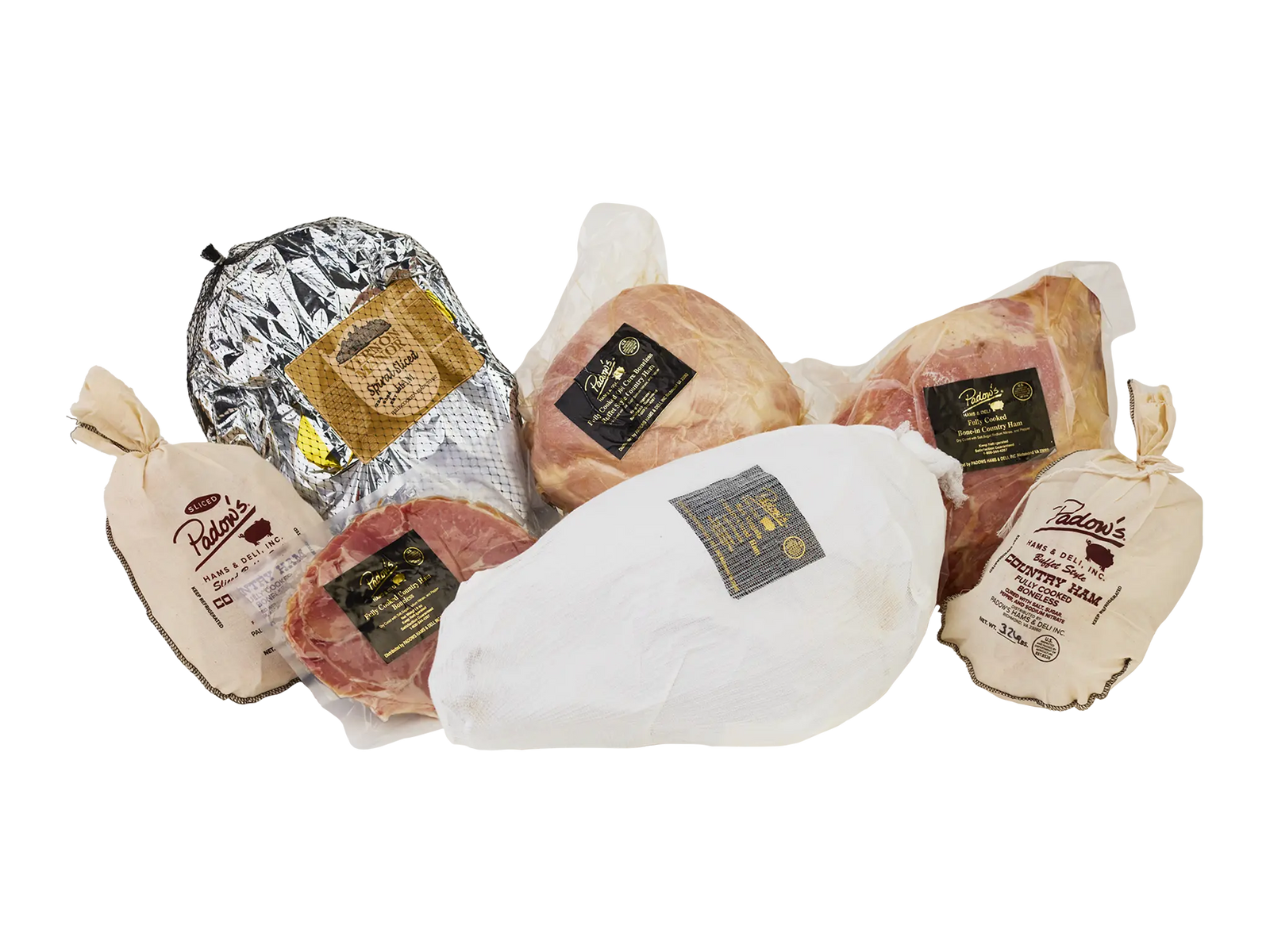
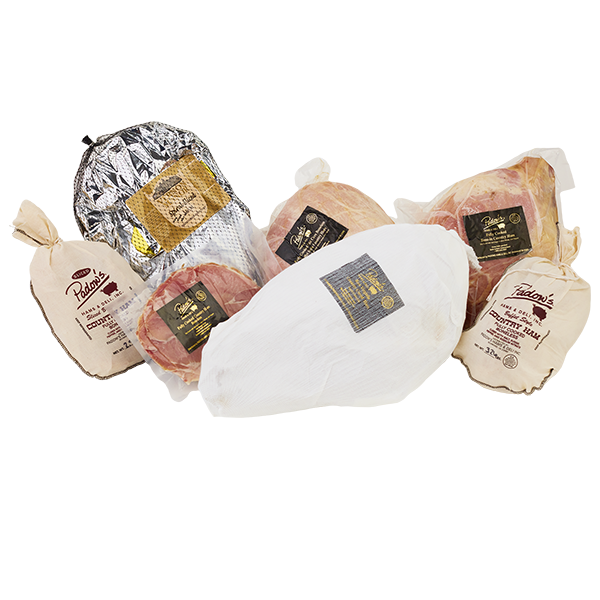
However you like your ham, bone-in or boneless, ours starts the same way: salt-cured the traditional way, with the same process we've used for generations. Browse the full Padow's Ham Collection to find the cut, cure, and format that fits your table.
FAQs
Is bone-in ham more expensive than boneless?
Bone-in ham usually costs less per pound, but part of that weight is bone. Boneless ham costs more per pound but is 100% usable meat, so the actual value is often closer than it looks.
Does bone-in ham taste better than boneless?
Most people find bone-in ham has more depth of flavor, since the bone contributes to the taste and helps keep the meat moist as it cooks.
Can you get a spiral-cut ham that's boneless?
Yes, boneless spiral hams exist, though bone-in spiral ham is more common and generally considered more flavorful.
How long does it take to cook a bone-in ham per pound?
A whole bone-in smoked ham typically needs about 18 to 20 minutes per pound at 325°F, cooked to a minimum internal temperature of 145°F.
Ready to pick your cut? Browse bone-in, boneless, and spiral options in one place.
Shop Padow's Ham Collection